Northern Lights Tours Reykjavík
Best Northern Lights tours & Aurora Borealis excursions in Iceland
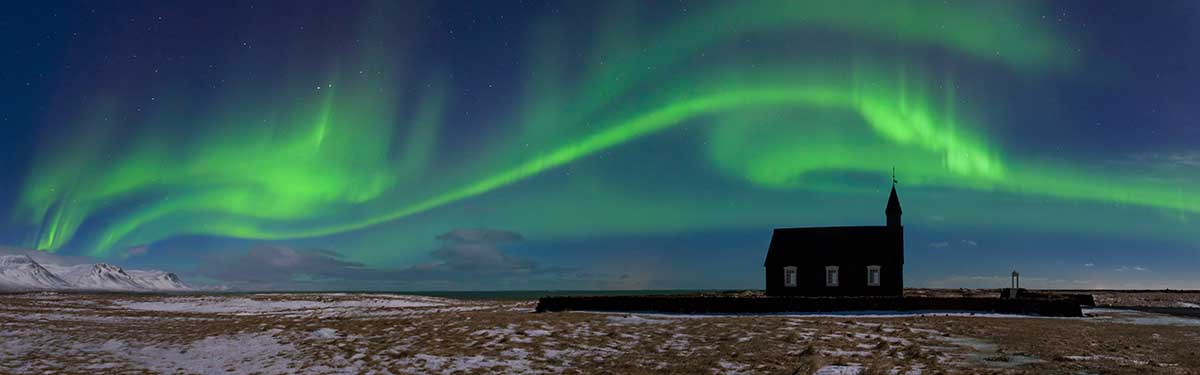
Everything you need to know about Northern Lights tours from Reykjavík. Compare bus and boat tours, discover the best time to see the Aurora Borealis and learn how to maximise your chances of seeing the Northern Lights in Iceland.
Northern Lights tours from Reykjavík: bus or boat? | |
| Best time | The best time to see the Northern Lights in Iceland is from September to April, when the nights are long and dark enough. In Reykjavík, October to March is the most popular period for Northern Lights tours. You always need three things: dark skies, as little cloud cover as possible and sufficient solar activity. |
| Bus or boat? | If your main goal is to have the best chance of seeing the Northern Lights, a bus tour is usually the better choice. A bus or minibus can travel to wherever the skies are clearest that evening. If you're looking for a unique experience and would like to see Reykjavík from the water, a boat tour offers a more atmospheric setting, although it is less flexible if clouds cover the bay. |
| Tours |
The most popular option is a Northern Lights bus tour from Reykjavík. Experienced guides monitor the weather forecast and Aurora prediction before heading to dark locations outside the city. Depending on cloud cover and conditions, this could be inland, along the coast or towards the Þingvellir area. You can choose between a standard coach tour or a smaller minibus tour for a more personal experience: 1. Standard bus tour 2. Minibus tourA Northern Lights boat tour usually departs from Reykjavík's Old Harbour. Sailing away from the city lights gives you an unobstructed view of the night sky. It's a peaceful and memorable experience, but unlike a bus tour, the boat cannot easily move to another region if clouds cover Faxaflói Bay. 3. Book boat tour |
| Practical information |
|
See the Northern Lights from Reykjavík
A Northern Lights tour from Reykjavík is one of the most popular excursions in Iceland during the winter months. Reykjavík is not as far north as Tromsø and also has more light pollution, making the chances of seeing the Northern Lights around Reykjavík slightly less predictable. However, it is still possible to see the Aurora Borealis from Reykjavík, provided the skies are dark and clear. The biggest difference compared with destinations such as Tromsø or Rovaniemi, which are both located directly beneath the Auroral Oval, is that in Iceland you are much more dependent on the weather. Atlantic weather systems frequently bring clouds across the island, so a successful tour is often about finding a clear patch of sky. That's why joining an organised Northern Lights tour is usually a much better option than waiting in the city.
My tip: You can check the latest Aurora forecast at auroraforecast.is and the cloud cover forecast at vedur.is. One thing that often confuses visitors is that on the cloud map, green actually means more cloud cover, not better viewing conditions. For the best chance of seeing the Northern Lights, you need both strong Aurora activity and clear skies.
What is the Aurora Borealis?
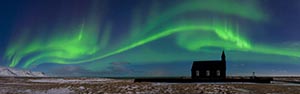
The Northern Lights, also known as the Aurora Borealis, are a natural light display created when electrically charged particles from the Sun reach the Earth's atmosphere. Guided by the Earth's magnetic field towards the polar regions, these particles collide with oxygen and nitrogen high above the Earth. The energy released during these collisions creates the colourful lights that dance across the night sky.
The colour of the Northern Lights depends on the altitude and the type of gas the solar particles collide with. The familiar green glow is the most common and is produced by oxygen at an altitude of around 100 kilometres (62 miles). During periods of strong solar activity, red, purple and pink colours may also appear. Because both solar activity and weather conditions constantly change, no two Aurora displays are ever the same. This unpredictability is exactly what makes seeing the Aurora Borealis one of the highlights of a winter trip to Iceland.
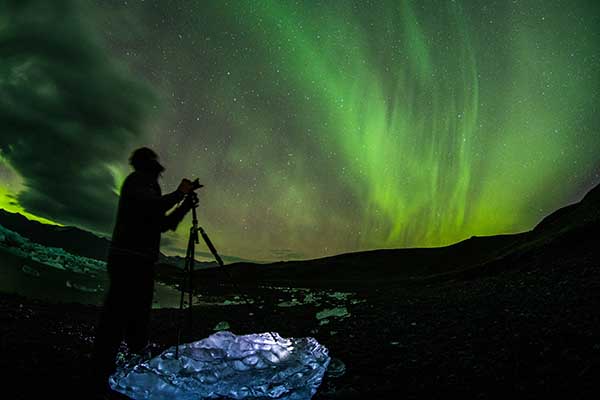 Join a tour to see the Northern Lights in Iceland.
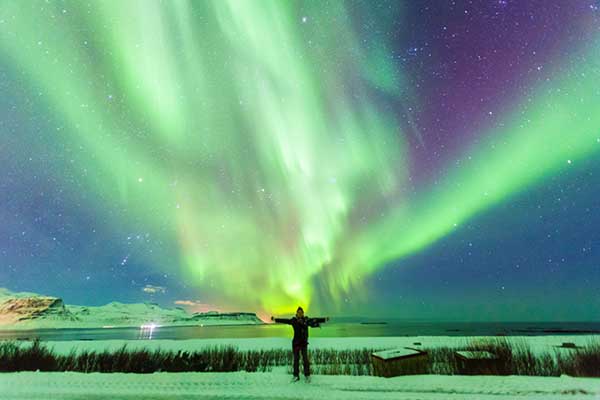 Northern Lights tours departing from Reykjavík.
Bus or boat: which Northern Lights tour is better?
① Best chance: For most travellers, a Northern Lights bus tour is the best option. The biggest advantage is flexibility. Using the latest weather forecasts and Aurora predictions, guides can decide where the chances of seeing the Northern Lights are highest that evening. Depending on the conditions, you may head towards lava fields, coastal areas or further inland via the Golden Circle, away from cloud cover and city lights (view bus tour options).
② Best experience: A Northern Lights boat tour offers a truly unique atmosphere. You sail out from Reykjavík into the dark waters of Faxaflói Bay, watch the city skyline disappear behind you and enjoy an unobstructed view of the night sky. On a clear evening, the experience can be spectacular. The downside is that a boat is far less flexible than a bus. If clouds move over the bay, it cannot simply travel to another region with clearer skies (view boat tour options).
My tip: If you're only booking one Northern Lights tour in Reykjavík and want the highest chance of success, choose a bus tour, preferably this premium Northern Lights minibus tour. If you're staying for several nights or value the overall experience more than maximising your chances, a boat tour is an excellent alternative.
How can you improve your chances of seeing the Northern Lights?
The best way to increase your chances is to keep several evenings free. Book your Northern Lights tour as early as possible during your stay in Reykjavík, rather than on your last night. If your tour is cancelled because of bad weather or you don't see the Aurora, you'll often have another opportunity later in your trip. Some tour operators even allow you to join another tour free of charge if your first attempt is unsuccessful. It's also important to check the cloud forecast, not just the Aurora forecast. Strong solar activity means very little if the sky is completely overcast, while even a weaker Aurora can be spectacular under clear, dark skies away from city lights.
Best time to see the Northern Lights in Iceland
The Northern Lights season in Iceland generally runs from September to April. During these months, the nights are long enough for Aurora viewing. The darkest period is from November to February, but September, October, March and early April can also be excellent, as temperatures are often milder and there may be more clear evenings. During May, June, July and most of August, Iceland experiences too much daylight to see the Northern Lights properly. If you're travelling specifically to see the Aurora Borealis, the best time to visit Reykjavík is in autumn, winter or early spring.
Book Northern Lights tours in Reykjavík

FAQ - Northern Lights Tours in Reykjavík
When can you see the Northern Lights in Reykjavík?The best time to see the Northern Lights in Reykjavík is from September to April, when the nights are dark enough. Ultimately, cloud cover, darkness and solar activity determine whether you'll actually see the Aurora Borealis.
Is a bus tour or boat tour better in Reykjavík?A bus tour is usually the better choice if you want the highest chance of seeing the Northern Lights, as the guide can drive to locations with clearer skies outside Reykjavík. A boat tour offers a more atmospheric and peaceful experience but is less flexible if clouds cover the bay.
How likely are you to see the Northern Lights?This depends on the conditions each night. During the season, you often have a good chance of seeing the Aurora, but sightings can never be guaranteed. In Reykjavík, cloud cover is usually the biggest challenge, so it's best to keep several evenings free.
Can you see the Northern Lights on your own in Reykjavík?Yes, during periods of strong Aurora activity, you can sometimes see the Northern Lights in or near Reykjavík. Your chances improve if you go to a dark location along the coast or outside the city. However, joining a tour usually gives you a better chance because guides actively search for clear skies.
What should you wear on a Northern Lights tour?Dress warmly in layers, including thermal clothing, a fleece or wool layer, a windproof jacket, warm socks, a hat and gloves. You'll often spend long periods standing outside, and the wind can make it feel much colder than the actual temperature.
Can you photograph the Northern Lights with your phone?Yes, especially if your phone has a Night Mode. Keep your phone as steady as possible, use a small tripod if available and allow the camera enough time to capture the light. In photos, the Northern Lights often appear brighter than they do to the naked eye.
Our readers say
4.8
(95.85%) 17
reviews
June 25, 2026
Martin: "We had a fantastic holiday in the capital of Iceland because of the good travel tips about activities, tourism and sightseeing in Reykjavik city."